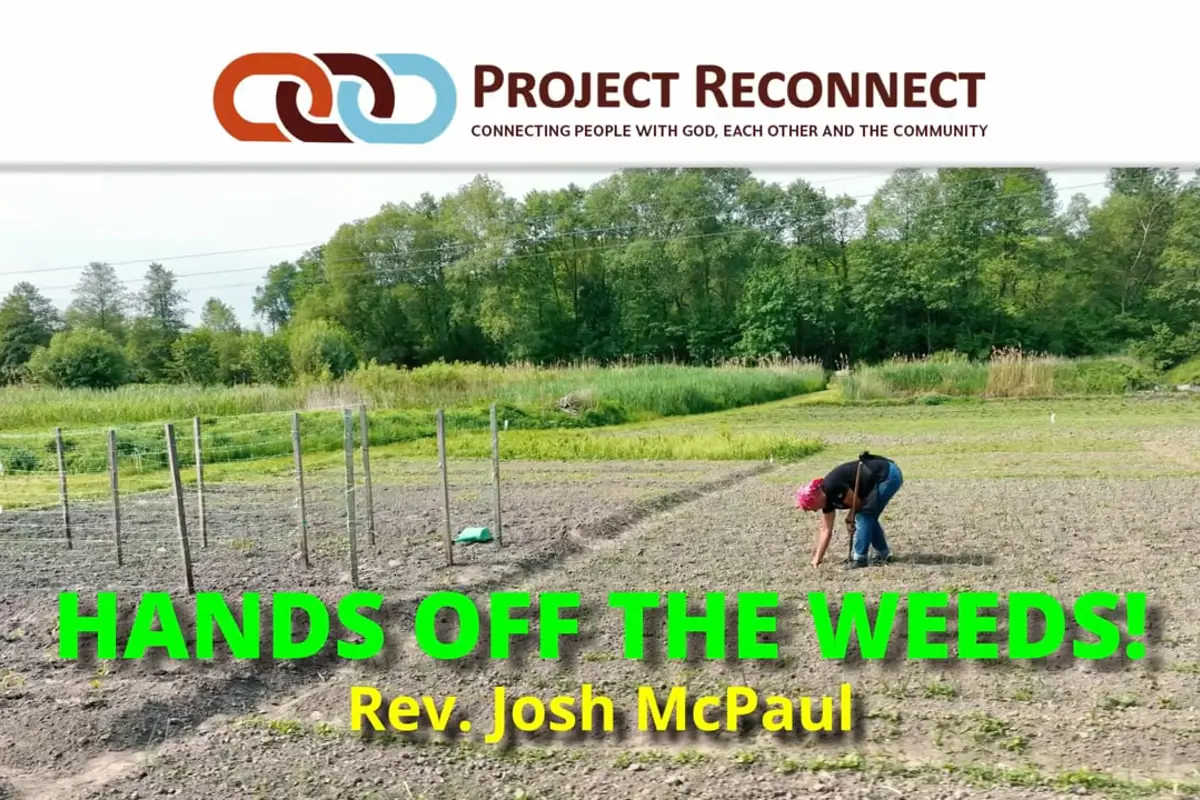
Matthew 13:24-30
Weeding Is Worse Than Weeds
In the parable of the wheat and the weeds, Jesus delivers a shocking message: stop trying to sort the good from the bad. Judgment belongs to God, and our calling is radical patience—with others and with ourselves.
A Strange Story About Weeds
Today we're looking at this strange story from Jesus—the parable of the wheat and the weeds. A good field is infected with bad seeds, so that both wheat and weeds grow up together. But instead of pulling up the weeds, Jesus tells the workers to wait and see. He doesn't want to make a mistake and accidentally pull up good wheat.
Jesus is clear about what he means. The field is the world we live in. The good seed are the children of the kingdom, and the weeds are evildoers and the causes of evil in the world. The harvest is the end of the age.
So Jesus is saying that good seed is uncertain, weeds are certain, and the eventual harvest is certain. What remains uncertain is: what should we do about the weeds right now?
The Urge to Weed
The servants are pretty clear about what needs to happen. They ask, "Do you want us to go and gather the weeds?" And it's obvious that's exactly what they want to do. Let's pluck them up before they cause more problems.
I sympathize with this. There's nothing more satisfying than pulling up a good weed, roots and all. Weeding feels like action. Weeding is justice. Weeding is getting in there and making things better. Isn't this the work of the church, of good government, of good people anywhere?
I would say yes. But in answer to the question, the master says:
"No. For in gathering the weeds, you might uproot the wheat along with them. Let them both—wheat and weeds—grow together until the harvest."
What Jesus is declaring is something quite shocking. It is a hands-off policy on the weeds.
Weeds Might Be Bad, but Weeding Is Worse
I'm not sure I agree with Jesus when he says, "Let them grow together." Allow? Permit weeds to just be there? Jesus says, "Whatever you do, don't weed." He's saying, in some ways, weeds might be bad—but weeding is worse.
"Don't just stand there, do something!" we want to say. But Jesus is saying, "Don't just do something—stand there."
If you look at the original language, it makes it even harder. The word Jesus uses for allowing or permitting the weeds to grow is aphiēmi—and this is the same word we use in the Lord's Prayer. It means to forgive. "Forgive us our sins as we forgive those who sin against us." "Father, forgive them, for they do not know what they do." It means to allow, to let, to forgive.
Judgment Is Real—but It's Not Our Job
Just to be clear, Jesus is not saying the wheat and the weeds are the same thing. There is judgment in this parable. It's not "anything goes." Evildoers and all causes of evil are real in this world, and one day the weeds will be thrown into the fire.
"The Son of Man will send out his angels, and they will collect from his kingdom all causes of sin, and will throw them into the furnace of fire, where there will be weeping and gnashing of teeth. And then the righteous will shine like the sun in the kingdom of their Father."
Judgment is coming. The fires of hell will be hot, and the children of the kingdom will burn like the sun. It seems everyone is on fire in the end—it's just a question of what's true about us. The fires burn away some things to nothing, but the fires make others burn bright.
But this parable is actually not about judgment or the end of the age. It's about today. It's about us. "Judgment is coming," says Jesus, "but you and I are not up to the job." We are not supposed to be judges. Sorting sinners from saints is not your job or mine. "Let the bad live alongside the good," says Jesus. "Let the weeds be."
Who Gets to Decide Who the Weeds Are?
I have a hard time with this. I want people in the weed-pulling business. Ignoring weeds seems like why we have these problems in the first place. It feels so passive.
But maybe Jesus would ask me, "Well, who gets to decide who the weeds are?" It tends to be the people in power, doesn't it? Most of the evil in this world was done by people who claimed to be pulling out weeds. Some thought they were weeding when they invaded or occupied or forcibly removed. They called it civilizing or colonization. Weeding out the poor by bulldozing their neighborhoods. Weeding out the rich by revolutions. Weeding out Jews and gays, young Black men. Mass incarceration is a weeding strategy.
Jesus might also say that each of us is someone else's weed. More damage has been done through weeding than through weeds—sitting in judgment on other people. Jesus might say that I'm not that good at discerning what weeds are, that I can't solve the world's problems or my own problems because I am a part of the problem.
As Alexander Solzhenitsyn said:
"The line between good and evil—between wheat and weeds—runs right through our hearts."
Jesus might say weeding gets addictive, and it never ends if the goal is perfect purity. Eventually, you'll be down on your knees going, "Is it a weed or a wheat? Well, can't be sure—pull it up."
The Kingdom Comes When Judgment Is Withheld
Jesus might say the kingdom of God is not a set of policies that you agree with. It is allegiance to Jesus and his way of doing things. The kingdom, Jesus says, only comes when judgment is withheld. It comes with radical acceptance—or maybe better, radical patience, which is the same thing most of the time.
Even if weeding is needed in the world, the kingdom gets a chance when you lay off the weeding. Maybe let's be less anxious about figuring out who's wrong and who agrees with us, and trust that God might be doing something else.
I've sometimes heard that patience with God is just another word for faith.
Patience with Others, Patience with Ourselves
In the church, is Jesus really calling us to allow the weeds? People who are spiritual or unspiritual, people who get it, people who don't? Of course, we must protect our kids, do background checks, be discerning. But when we look around the church, sometimes we see people who look pretty weedy—and maybe we've been really good at misidentifying weeds and getting rid of people who shouldn't have been gotten rid of.
I've heard that patience with other people is just another word for love.
But let's talk about ourselves. The flip side of accepting others means that you also need to be accepted. Moving from endless improvement to endless patience. Patience with ourselves is hope.
Jesus talks about this seed of truth, of life, of a future. Jesus is planting that seed in you and in me and in the world and in the church. Our goal is to tend it, to watch it, and to wait.
In the name of the Father and of the Son and of the Holy Spirit. Amen.