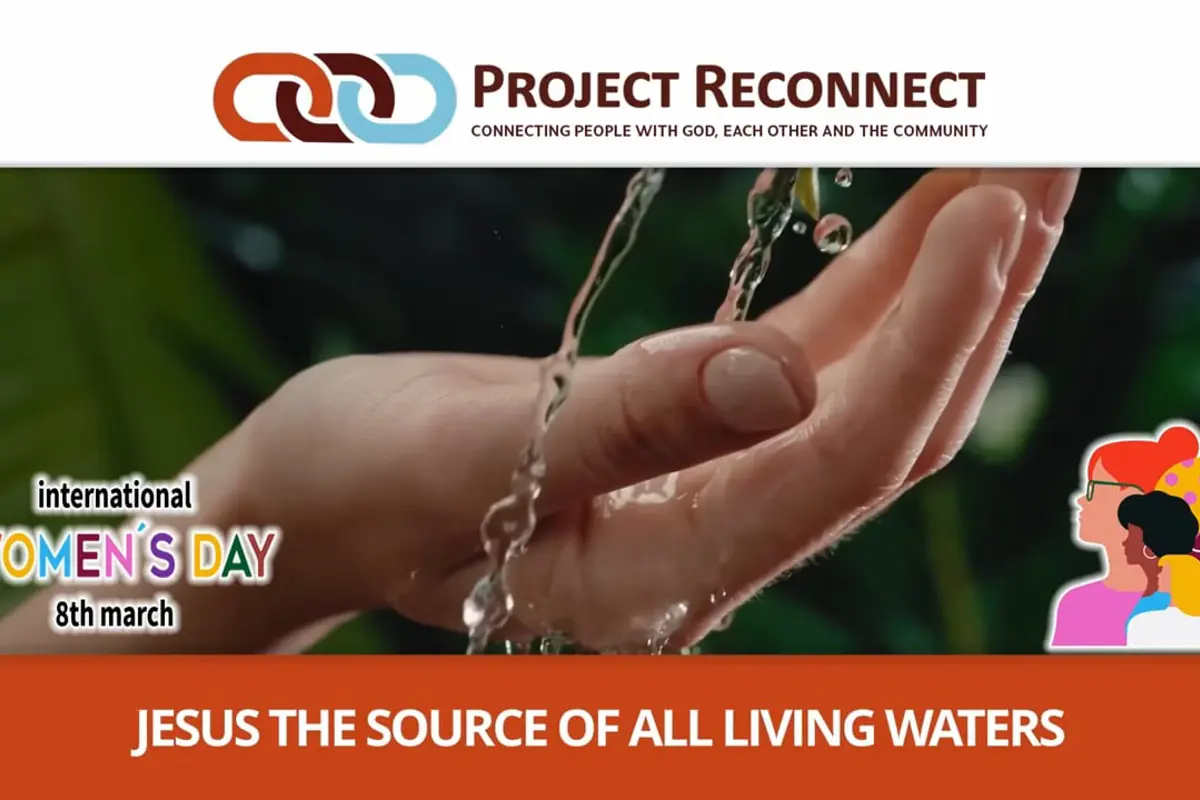
John 4:5-42
Living Water and the Freedom of Being Seen
In the encounter between Jesus and the Samaritan woman, we find a story not of judgment but of compassion — one that calls us to look beneath the surface and attend to the reality of gender-based violence in our world today.
An Encounter That Breaks Barriers
John's Gospel tells us about Jesus making his way through Samaria, coming to Jacob's well, where he encounters a woman who is there to draw water. Jesus is tired, thirsty, and vulnerable from his journey, and he asks her to give him a drink. But she responds out of what she has always known — that Samaritans and Jews made their differences the reality of living.
Yet Jesus, in his own vulnerability, sees that what she has always known is that differences separate others.
This woman is no ordinary person. She is very conscious. She knows her community well. She speaks of the greatness of her ancestor Jacob. But when Jesus offers her the living waters of life, she also notices that Jesus has no bucket to draw from the well. Most of her responses, if we look closely, are not so much resilience as they are the product of what the social construct of her community has imposed on her.
A Plural Encounter
Biblical scholars have said this is an encounter that doesn't involve only two people. Rather, it is a plural encounter — Jesus and the Samaritan woman each representing their communities. The unnamed woman, called simply "a Samaritan woman," is symbolic of her people. For her and Jesus to be in conversation not only challenges the status quo, but the dialogue itself needs our full attention.
The conversation that begins with Jesus asking for a simple drink immediately breaks two taboos: a Jew speaking intimately with a Samaritan, and a man initiating a conversation with a woman in public.
But Jesus quickly moves from physical water to living water:
"If you knew the gift of God and who it is that is saying to you, 'Give me a drink,' you would have asked him and he would have given you living water."
For the woman, living water simply meant running water — like a fresh spring as opposed to stagnant well water. But for Jesus, it meant the gift of the Holy Spirit and eternal life.
Compassion, Not Judgment
Jesus mentioning the woman's five husbands is often misinterpreted as judging and shaming her for her past and present relationships. But rather, it comes out of compassion. Jesus recognizes that the laws of that society gave rights only for women to be married off to the brothers of their husbands and their husband's families. This woman has been passed around as many times as the males have determined. For her, that is the reality of survival — living in a space of having no options but to be vulnerable and submissive within that society.
Here, Jesus recognizes the history and complication of the woman's reality.
Known from the Womb
I'm also reminded of the calling of the prophet Jeremiah, who was sent to bring a message of judgment and hope to Judah. Jeremiah resisted because he was too young — that was his excuse. Yet in this encounter between Jesus and the Samaritan woman, we see a community that has always used differences of religious understanding, gender as exclusion, justification of violence toward her gender, and segregation as a reason to be unwelcoming.
In the Jeremiah story, we are reminded that God said:
"I have known you from the time you were formed in your mother's womb."
And here, Jesus' response transforms the labels that have justified the woman's exclusion. She becomes the first disciple — the one who sees, hears, and goes to tell others that she has encountered the one who is greater than their ancestors. The root and source of all living waters has freed her.
Looking Beneath the Surface
This sermon falls on March the eighth, which is International Women's Day — a day to celebrate women's achievements throughout history and across nations. As you look to celebrate women, remember that women in other parts of the world are still fighting for their freedom because of the social constructs forced upon them: not to be seen, given no options or choices, or not to be heard.
Today's story is an encounter between Jesus and the Samaritan woman. They represent two communities coming together instead of seeing differences. Jesus recognizes the complicated reality of this woman and the community she represents, so he offers her the living waters.
Water on the surface may look still or calm and can sometimes be like a mirage. But we need to look and dive under the surface of that water. There, we can often see the rough and disturbing movement that happens underneath. In the same way, we should look at the issues women face around the world. There are many things happening beneath the surface of those waters.
A Lenten Call to Action
Here in Australia, we are a first-world country where our options give us freedom. However, we are still the same as other countries where violence against women still occurs. One out of three women has experienced violence in Australia — that is a staggeringly high number.
In this time of Lent, let us reflect on how we pay attention to violence that occurs in the reality of women and those who suffer because of their gender.
The Samaritan woman told her story and she was believed:
"Many Samaritans from that city believed in him because of the woman's testimony: 'He told me everything I have ever done.'"
Once we see, hear, and listen to the survivors and victims of gender-based violence, we too fulfill their thirst for freedom. In acting on such difficult issues, we allow the hope of God's love, care, and compassion to become more visible and present — to be encountered by those individuals and communities in spaces often forgotten.
Amen.