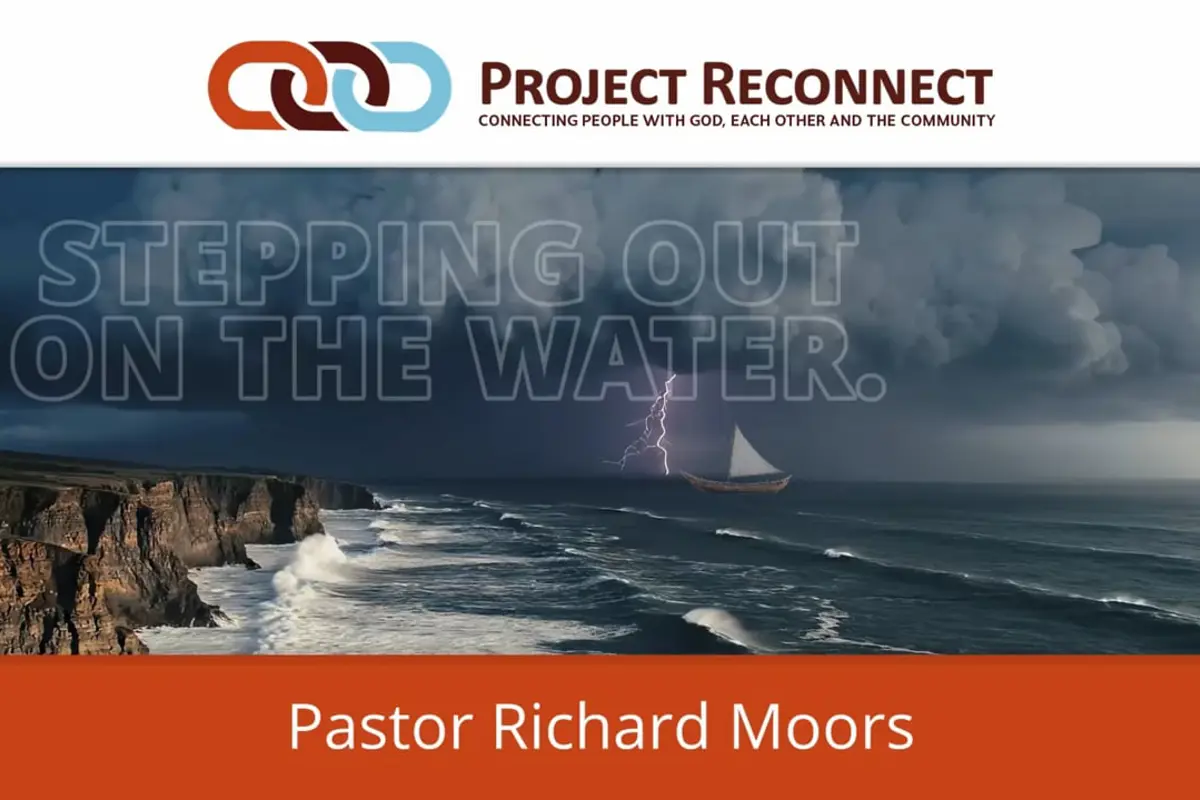
Matthew 14:22-33
Keep Your Eyes on Jesus, Not the Waves
When God calls us to step out in faith, we often focus on opposition, lack of resources, or our own limitations. But like Peter walking on water, our ability comes not from ourselves but from the One who calls us.
A Familiar Scene on the Water
This is a reading you're probably familiar with. Jesus has just fed the 5,000, and he sends his disciples across the lake. It's partly so that Jesus can have some time alone to pray, but also, as the commentators note, John's Gospel tells us that after the feeding of the 5,000, the people want to make him king. Perhaps Jesus wants to distance his disciples from this form of thinking. Let's face it, they get it wrong enough by themselves.
So while Jesus spends some time alone to pray, the disciples are having a hard time. They're out on the lake, the wind has blown up against them, and it's causing huge waves. It's not a fun night to be out on the lake.
Early in the morning, sometime between 3:00 and 6:00, Jesus goes walking out to them. Think of it: the disciples have been working hard all night to fight against the wind. The waves are raging around them. There's probably little light at such an early hour, and they see a shape moving towards them. We can understand why the first thought in their minds is that this is a ghost rather than, "Oh, Jesus is coming out to us."
Jesus doesn't leave them in fear. He reassures them:
"Take heart. It is I. Do not be afraid."
The disciples can breathe again. It's okay—it's Jesus. But hang on. If Jesus can walk on the water, what does that mean?
Peter Steps Out
Peter, who is never someone to sit back and wonder, yells out, "Lord, if it's you, command me to come to you on the water." Peter wants to be the best disciple he can be. He wants to show his faith in Jesus, so he's willing to step out of the boat if Jesus tells him to.
When Jesus says, "Come," Peter steps out of the boat—and wow, he's walking on the water. How amazing. But then he starts to think about the wind and the waves, and as he focuses on them, he starts to sink. He has to call out to Jesus.
Jesus, of course, reaches out and helps him back to the boat and safety with the words, "You of little faith, why did you doubt?" And naturally, all of the disciples are amazed and worship Jesus.
Walking on Water in Our Own Lives
As we walk the Christian life, we find ourselves out on the water. God will call us to new places or tricky places where we have to trust in him. But too often, we turn our attention onto the world around us.
Focusing on Opposition
We might focus on the opposition that we face—people who are not happy with the message that we bring. A couple of times when I was in Brisbane, I put a promo for one of our kids' holiday clubs on our local Facebook group, and someone complained about it. In those moments, the temptation comes to let that become the focus and to argue why it's fine that I've put my post on the group. But that would draw me away from what God wants.
Focusing on What We Don't Have
Sometimes we get focused on what we don't have. "How can we possibly do this ministry? There's so much that we would need to be able to succeed." A bit like Peter thinking he's not good enough to walk on water—we get caught thinking about what we don't have.
We don't have volunteers. Well, that's not just a problem for the church. A couple of years ago, my family and I were on holidays in Warwick, and we went to the local museum. The people there were saying they could keep it open that year, but they weren't sure about the next year because of lack of volunteers. We then went down to Tenterfield, where the historic home wasn't open on a day that was scheduled to be open, presumably because of lack of volunteers. This is a problem across society. We need to get creative in how we deal with it—not thinking, "Oh, this is a church problem," but, "This is the new normal. What do we do?"
Or we might focus on the fact that we don't have a minister. But I think that you can connect with your community, which you've been part of for decades, much better than a minister who is new to the area.
Or we focus on the few people who are attending. Years ago, at a Youth Workers in Service, Kenda Creasy Dean encouraged us to never start a youth group with the question, "Where is everyone?" Because that says to those there that they don't matter—you're only interested in the others who aren't there. A speaker at Amplify Conference in 2023 in Brisbane encouraged us to be grateful for those that we have, for those are the ones that God wants us to work with. Thinking of those we don't have turns our eyes from the real ministry with those that we have.
Focusing on Our Own Limitations
We can get caught up with what we can and can't do. We think of our skills, and we pick out the things which we might not be gifted in. We become hesitant in stepping out. It's as if we need to make the church work—we need to do it all, or it will just all fall apart.
It Was Never About Our Ability
But the truth is that it is Jesus and God who work by the Holy Spirit through us to keep the church going, to share the wonderful message of God's love.
Peter's problem isn't that he suddenly couldn't walk on water. He could never walk on water. But Jesus could allow him to do that. As he turned his eyes away from Jesus and focused on what he could do, then all he could do is sink.
We need to turn our eyes from focusing on working out what we can do and instead think about what God is calling us to do. If God is calling us to something, he will provide the gifts and the skills to do it.