Matthew 9:35–10:8
Go and Do What Jesus Did: Where the Church Began
Reflecting on the origins of the church's mission, we discover that the call to the first disciples is the same call to us today: go and do what Jesus did — reaching out with justice, peace, and love.
Sheep Without a Shepherd
Where did it all begin? Where did the church begin? One way of looking at it is to ask: when did Jesus send out the disciples? The gospel reading from Matthew gives us a window into exactly that.
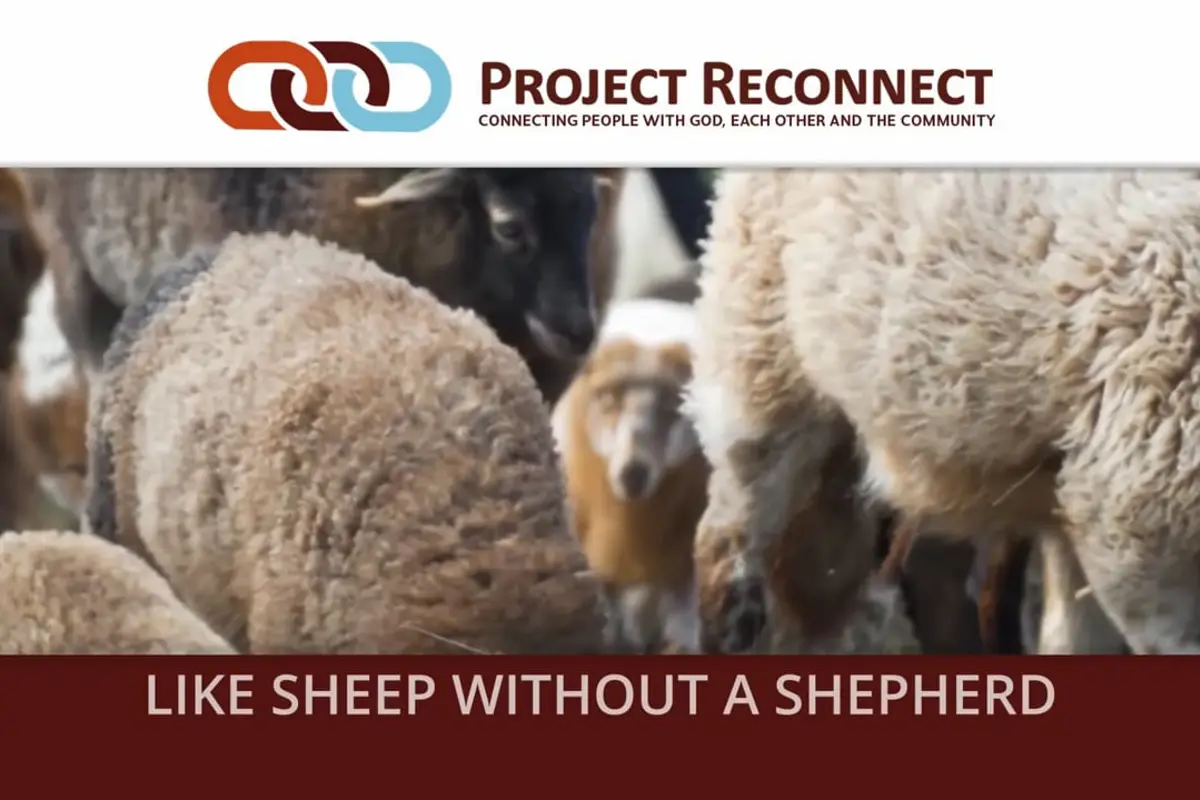
Matthew says that the people were like sheep without a shepherd. Now, that's not really the same as having a sheep farm without a farmer. Sheep were vitally important in the ancient world, and so were shepherds. The shepherd didn't have dogs, didn't have a motorbike, didn't have drones — and didn't have fences either. Everything depended on the relationship between the sheep and the shepherd.
The shepherd would carry food, because the sheep often needed supplementary feeding. So the sheep would follow the shepherd because the shepherd was the one who provided. That's why you could lose a sheep — not on a fenced farm, but in a world where everything hinged on that living relationship.
Matthew's hearers would have recognized this image from the Old Testament, where Israel itself was sometimes described as sheep without a shepherd. And Matthew is giving us a picture of the beginnings of the church.
Twelve Disciples, Twelve Tribes
Matthew tells us Jesus chose twelve disciples. Why twelve? Because there were twelve tribes of Israel. And then he sends them out to the lost sheep of the house of Israel — not to the Gentiles, not to the Samaritans, but specifically to Israel.
This is historically accurate. Jesus' ministry was primarily to his own people. His contacts with Gentiles were rather incidental. But then, at the end of Matthew's gospel, the risen Jesus appears before the disciples in Galilee and says something much broader: "Go and make disciples of all nations, and teach them what I've been teaching you."
Matthew is compressing into a single moment what Luke unfolds over ten chapters in Acts. The mission expanded — from Israel outward to the whole world.
How They Did It
The practical arrangements were simple. Jesus sent the twelve out in Galilee. The idea was that you'd go to a village, someone would put you up, feed you, and then you'd move on to the next place. You let yourself be looked after.
This is actually the origin of what we call stipended ministry. A stipend is not a wage — it's not a reward for qualifications or years of service. It's a living allowance. That's how the earliest mission worked.
Of course, once the movement spread beyond Galilee, there were all kinds of challenges. You can't just walk from village to village when you're traveling overseas to Ephesus or Rome. People adjusted. They met in houses, not church buildings. Visiting preachers would come and be hosted in someone's home.
Paul himself adapted. In places like Philippi or Thessalonica, he chose to work part-time as a tentmaker rather than expect the community to meet all his needs. Some people criticized him for it — "Paul doesn't trust God; he should keep to the rules." But Paul was flexible. He always asked: What is the most loving thing to do? In each new situation, the church needed to adjust.
Go and Do What I Do
What did they go out doing? Jesus said something beautifully simple: "Go and do what I do."
He taught his disciples — and us — to pray, "Your kingdom come." The kingdom was a way of talking about the great vision, the hope that Jesus described as being like a feast where people come together and there's room for everyone at the table. Nobody excluded. A vision of justice and peace and inclusivity.
And it's not just a hope for the future — it's an agenda for the present.
So what the disciples were called to do was not just talk about this hope, but to live it out. That was a troubling message, of course. If you go into Rome's empire and say, "Here is something different from what you offer," you're going to get into trouble. Jesus got into trouble. He was crucified for it.
But the call was clear: reach out to people who are alienated, marginalized, who have marginalized themselves, who feel they are no good — or whom others have decided are no good.
Our Call Today
When we go back to where it all started, it helps us too. What have we got to do? Go and do what Jesus did.
We share his ministry. We can be people who embrace the vision of justice and peace represented in the Kingdom of God. When we pray "Your kingdom come," we take that as our agenda. By the Spirit and by God's love, we are energized to be partners with God, partners with Jesus, doing what Jesus did in our particular community.
What does that mean for you? I know when I think about what it means for me, it can mean all different kinds of things. But I need to be in oneness, in partnership. I need to feel that I belong to this movement. So do you.
O God, your kingdom come. We want to be part of the great vision, the great hope. We want to be part of spreading your love and your justice, your peace and your healing in our world. Help us to find what that means for us in our lives, and give us the strength to stay with it. In the name of Jesus. Amen.